
Electric Cars in Pakistan 2025: Prices, Features and Trends
Electric cars are now gaining widespread popularity in Pakistan as a promising response to burgeoning environmental problems, energy issues, and urban mobility issues. With the global trends advancing toward green technology and sustainable transport, the application of electric vehicles (EVs) in Pakistan is aimed at reducing its dependence on fossil fuels and controlling increasing air pollution. The process involves power stored through electricity in batteries to drive the motors instead of combustion engines relying on petrol or diesel. This shift is of importance to Pakistan since these vehicles heavily contribute to air pollution and city smog through exhaust emissions. Electric Cars in Pakistan adoption in the country also includes developing local EV models for the country that suit its road conditions, energy availability, and affordability to consumers. Impressive promises to a cleaner environment would be met with these pakistan electric cars, in compliance with the global demand for emission reductions.
پاکستان میں الیکٹرک کاریں تیزی سے مقبول ہو رہی ہیں کیونکہ یہ ماحولیاتی مسائل، توانائی کی کمی اور شہری نقل و حرکت کے چیلنجز کا حل پیش کرتی ہیں۔ بیٹریوں پر چلنے والی گاڑیاں ایندھن پر مبنی انجنوں کی جگہ لے کر فضائی آلودگی اور اسموگ میں کمی لاتی ہیں۔ پاکستان مقامی ماڈلز تیار کرنے پر بھی کام کر رہا ہے جو سڑکوں، توانائی کی صورتحال اور صارفین کی استطاعت کے مطابق ہوں۔ اس اقدام کا مقصد اخراج میں کمی اور صاف ماحول فراہم کرنا ہے جو عالمی تقاضوں کے مطابق ہے۔
Both public sectors and private consumers gradually see it as personal vehicles, especially highlighting innovation and a responsibility toward the environment. Such vehicles can also reduce noise pollution, improve urban air quality, and improve the economy by decreasing dependence on imported fuels, which then burdens the country’s economy.
Overview of the Electric Car Pakistan Market
Pakistan is evolving, and it is projected that the compound annual growth rate will increase significantly over the next decade. Currently, only a small percentage of the EV sales actually represent total vehicle sales, but it has good growth prospects as the infrastructure improves and consumers become more aware. These, Karachi, Lahore, and Islamabad have been the first cities to test waves of adopters of the cars right now, mostly consisting of environmentally conscious buyers and corporate fleets. However, the broader adoption has been slowed by EVs’ higher upfront costs in comparison with conventional vehicles, although it can be cheaper throughout the total cost-of-ownership perspective due to low running and maintenance costs. A few local and start-up manufacturers are trying to make affordable Pakistan electric cars for the local market to come closer to the affordability that this new evolution has produced, while local importers continue to import EV models from China, South Korea, and Europe. Improving financing options and government subsidies for the developing market is great in order to help offset sticker shock for potential buyers.
History and Development of Electric Cars in Pakistan
The technology regarding this did not enter the country very fast initially, through import and limited-scale pilots to test the feasibility. Around 2015-2018, a few Pakistani electric car models entered metro areas but were quite expensive and devoid of infrastructure development. Gradually, the attention attracted the government to formulate policies that invited local manufacturers to invest in Pakistan electric cars technology. More startups started engineering e-cars for Pakistani conditions by 2020, as they understood that these are benefits in both economic and ecological aspects, along with increasing climatic awareness and economic benefits attached to EVs. Development history is reflected in this as a transition from dependent imports to indigenous manufacture and assembly, characterized by models competitively priced for Pakistani consumers. It is at scale to mainstream levels in Pakistan.
Government Policies Supporting Pakistani Electric Car
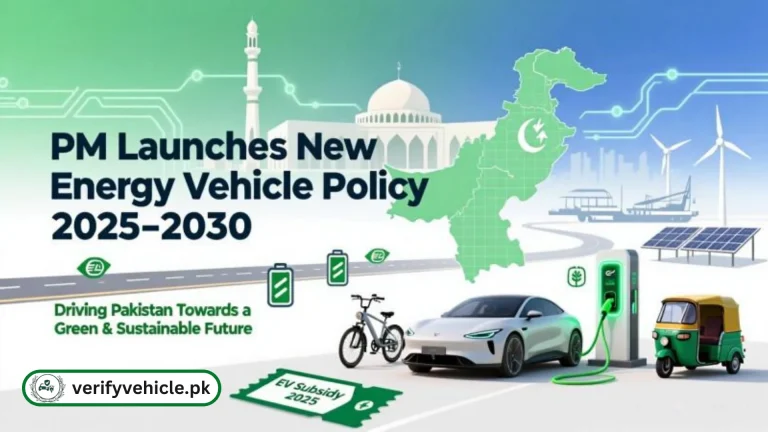
The federal government of Pakistan has laid down policy measures to promote this in the country. For example, the National Electric Vehicle Policy 2021-30 is one such policy under which the Government of Pakistan proposes to reduce greenhouse gas emissions through electric vehicles. One such aim under this policy is to obtain a target of around 30% of new vehicle sales to be electric by 2030.
- Zero import duties and sales tax on fully electric vehicles for the first few years.
- Reduced excise duties and tariffs on EV components imported.
- Incentives for establishing local assemblers, including tax holidays for manufacturers.
- Subsidies for the installation of home and public EV charging stations.
- Preferential registration and road tax rates for Pakistani electric car.
Types of Electric Cars Available in Pakistan
Battery Electric Vehicles (BEV), these pakistani electric car run completely on electricity stored in the onboard batteries with no tailpipe emissions. BEVs are mostly small city cars and SUVs offering a range from 150 km to as high as 400 km on a single charge. The most popular examples are the Hyundai Kona Electric and the MG ZS EV, designed to cater to urban drivers. Plug-in Hybrid Electric Vehicles (PHEV) utilize a combination of electric propulsion and traditional internal combustion engines, thus allowing for greater flexibility where charging infrastructure is scarce. PHEVs can run on electric power for short distances and switch to petrol/diesel for long-distance travel. Customarily, harsh weather and road conditions in Pakistan have forced manufacturers to engineer EVs such that they have strong batteries, suspension systems, and energy management techniques, suitable for local conditions. In particular, commercial EV use, like electric rickshaws and light transport Pakistan electric cars, is increasingly becoming a source for low-cost daily urban transit.
Leading Electric Car Brand Companies in Pakistan
Several international and local players are active:
- Hyundai: The Kona Electric emerged as one of Pakistan’s most famous imported battery pakistan electric cars, admired for its range and safety features.
- MG Motors: The MG ZS EV, being marketed by local distributors, appeals to the middle and upper-middle-class demographic with its up-to-date comforts and conveniences.
- Chinese EV Brands: Companies such as Changan, JAC Motors, and BYD are creating Pakistsn electric cars imports in the competitive pricing arena.
- Local Startups: Firms such as Master Motors and Metro Electric have unveiled prototypes and are in the process of developing economical Pakistani electric cars to compete with imports.
- Telecom Companies: Partnerships for IoT-based smart EVs with telecom players are also being forged.
These brands are focusing on introducing Pakistan electric cars suitable for Pakistani consumers’ budget constraints, ride quality preferences, and performance expectations, thus propelling the competition for growth in this new market.
Price Range of Electric Cars in Pakistan
The range carries a premium compared to prices for internal combustion engine vehicles, mainly owing to the battery cost and production being at a small scale. Presently, pakistani electric car prices are as follows:
- Entry-level Models: Compact hatchbacks or small sedans, mostly city-driving-friendly, prices for these pakistan electric cars lie between PKR 3.5 million and PKR 4.5 million.
- Mid-level Models: These models, with better battery capacity and driving range, fall between PKR 5 million and PKR 7 million, which includes mid-size sedans and small-sized SUVs.
- Premium Models: Includes luxury SUVs and performance-oriented EVs with advanced features and extended mileage, priced above PKR 7 million.
- Government incentives such as tax rebates, import duty exemptions, and the subsidized development of charging infrastructure ease the overall cost to the consumers. Plus, with the added advantage of resale value and running cost (cheap electricity against fuel), the EV will become much more reasonable for a long time to come.
EV Cars Charging Infrastructure in Pakistan
The development of E-vehicle charging stations in Pakistan is critical for the emergence of affordable EVs. The charging network presently in Pakistan comprises established stations in recognized urban centers at shopping malls, office complexes, and highways, however, their numbers are still too few for standard use. A lot of EV owners set up chargers at home because of convenience and power supply. Intentions are in place to install fast DC chargers along primary routes to reduce charging times from several hours to less than 1 hour for some models. Government and Private Sector Initiatives: MEPCO and other power utilities, in turn, are partnering with private startups working toward EV-based mobility solutions for the installation of larger amounts of charging points.
Role of Local Manufacturers in the EV Car Industry in Pakistan
Local manufacturers are among the worst actors when it comes to producing viable and affordable Pakistani electric car.
- Cost Reduction: Local assembly will considerably reduce import duties and logistics. Thus, the final prices of EVs shall be lowered.
- Customization: Designing EVs very much suited to Pakistani roads, climate, and consumer preferences will ultimately assist in extending durability and acceptance.
- Skill Generation: Generation of skilled manpower will ensure the long-term sustainability of this industry and innovations.
- Joint Collaborations: Engagement in joint ventures with foreign players will successfully provide access to improved battery technologies and manufacturing methods.
- After-Sales Network: Local companies can establish large service and parts support, thus instilling consumer confidence.
- Some of the startups are also engaged in converting existing vehicles to electricity, assisting efforts towards this transition using sustainable local solutions.
Environmental impact of electric vehicles in Pakistan
Electric cars carry multiple and significant environmental benefits in the case of Pakistan. They can enhance urban air quality and fight climate change. EVs do not emit direct CO2, nitrogen oxides, or particulate matter, unlike fossil-fuel vehicles that cause the most damage in smog and respiratory illnesses. Even as the current electricity mix in Pakistan relies partly on fossil fuels, EVs generate a lower lifecycle emission than petrol/diesel vehicles. E-vehicles work quietly and reduce urban noise pollution. Electric motors convert electricity to mechanical energy much more efficiently than combustion engines. All these factors have further aggravated the already poor air quality in Pakistan due to the increase in motor traffic, with the most densely populated city areas being badly affected. An E-car reduces that as it replaces a ‘polluting vehicle’ with a clean form of transport, which eventually improves the public health aspect of environmental sustainability.
Conclusion
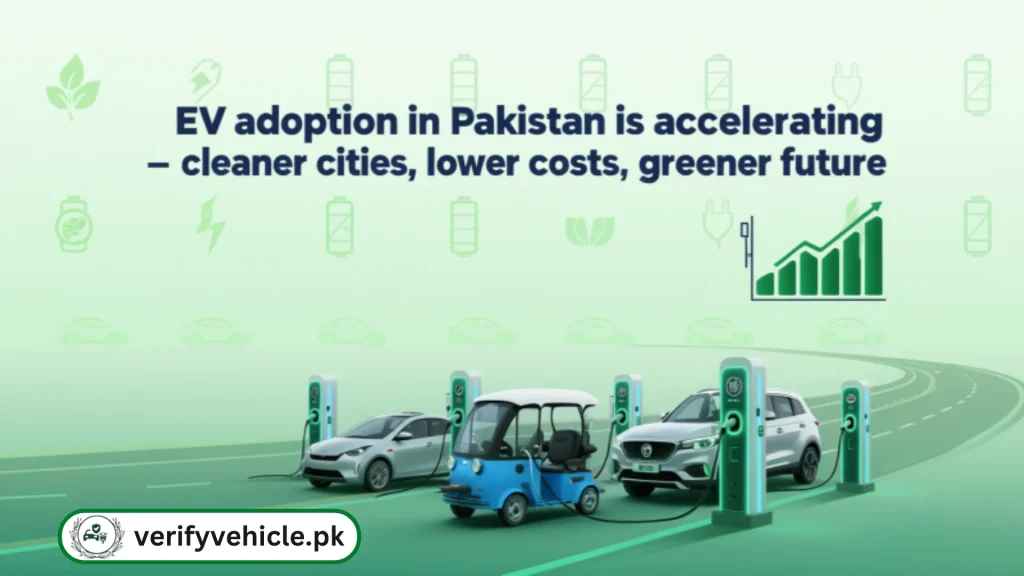
Electric cars in Pakistan would also demonstrate an important strategic shift towards sustainability for the economy, resilience, and advancing technology. Although there have been a few problems at the beginning, some successful partnerships among policymakers and manufacturers, as well as consumers, are enabling a firm foundation for electric vehicles to grow in stature. This shift is a move towards the fulfillment of Pakistan’s obligations on issues such environmental protection, energy security, and economic development. These are not just a mode of transportation; they are a hope for cleaner cities free from pollution-related health costs and a green, forward-looking future for the coming generations.